Detroit-style pan pizza in a black steel pan, cheese edge caramelized, under a single warm lamp

Every style in the book, by its bake profile

Proof1–2 h
Cold ferment24–72 h
Bake500–900°F

Pizza Styles Around the World

Nine regional styles, one set of variables. Compare them here, then decide which one your oven and your patience can handle first.

Four variables, endless pies

Every pizza style in this collection uses the same basic ingredients. What changes is how the dough is mixed, how long it ferments, and how hot it bakes. That is the whole difference between a foldable New York slice and a fork-and-knife Chicago deep-dish.

This page compares the major styles so you can decide which one to bake first, and understand why each one works the way it does. Dion's Pizza Cookbook teaches dough and fermentation as separate chapters before it hands you the styles, which is why the comparison below keeps coming back to hydration, ferment time, and oven heat rather than to toppings. Get those three right and a recipe from Naples, Detroit, or Rome stops being a mystery.

The nine styles at a glance

Oven grade runs from a standard home oven to a wood-fired floor. Stage time is the working window the book plans around.

Style Oven grade Stage time
Neapolitan Very high heat 24 h +
New York-style Home oven, 500–550°F 1–3 days
Detroit-style Home oven, pan bake 1–2 days
Chicago deep-dish Home oven, long bake 1 day +
Chicago stuffed Home oven, long bake 1–2 days
Focaccia Home oven, moderate Same day
Pizza al taglio Home oven, sheet pan 1–2 days
New Haven-style Very high heat 1–2 days
Tavern-style Home oven, fast 1–2 days

Neapolitan against New York-style

These two are the poles of the book. One wants more heat than most home ovens produce; the other was built for a standard kitchen and forgives almost everything. Read the profiles side by side before you pick a first bake.

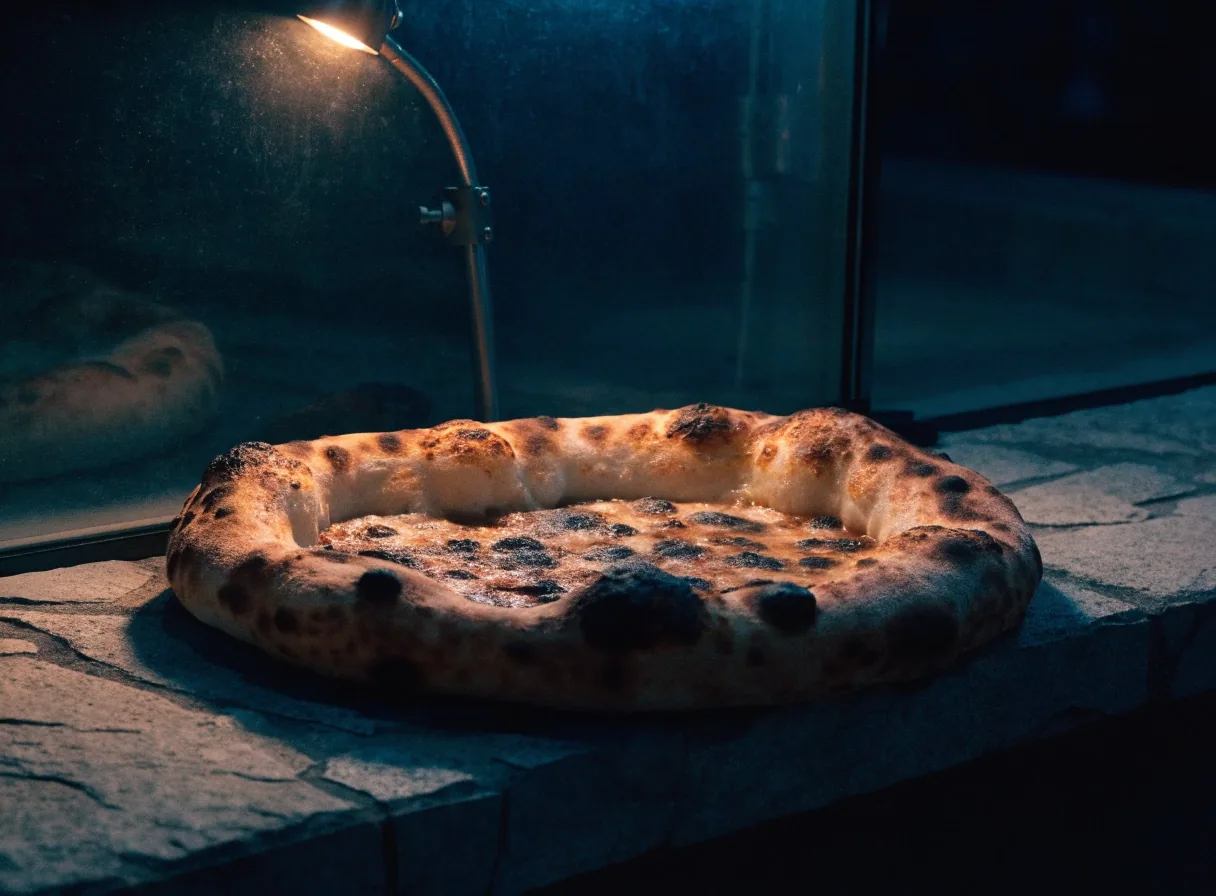
Neapolitan pizza with a blistered cornicione on a dark stone bench

Neapolitan: the reference point

Neapolitan is the style most other pizzas get measured against. It uses a high-hydration dough, ferments for at least a day, and bakes fast at very high heat, giving a soft, blistered cornicione and a slightly wet center.

It is the hardest style to nail in a standard home oven because the bake wants more heat than most ovens produce. The book shows the closest workaround, including steel preheating and a final broil, but it is honest that a wood-fired oven is the real answer. If you want to understand dough fermentation, start here and accept that your first attempt may fall short.

HydrationFermentBake High24 h +60–90 s
Proof2 h
Ferment24 h
Bake900°F
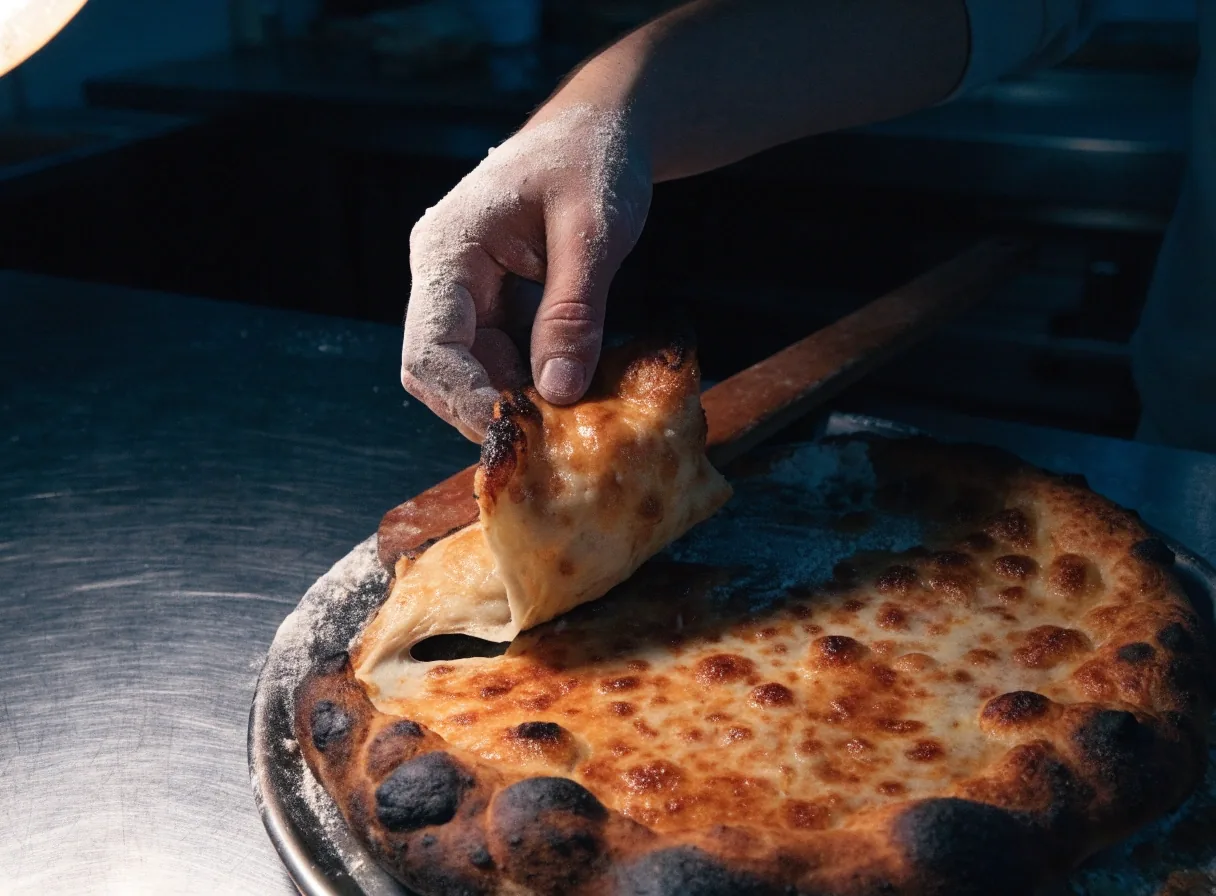
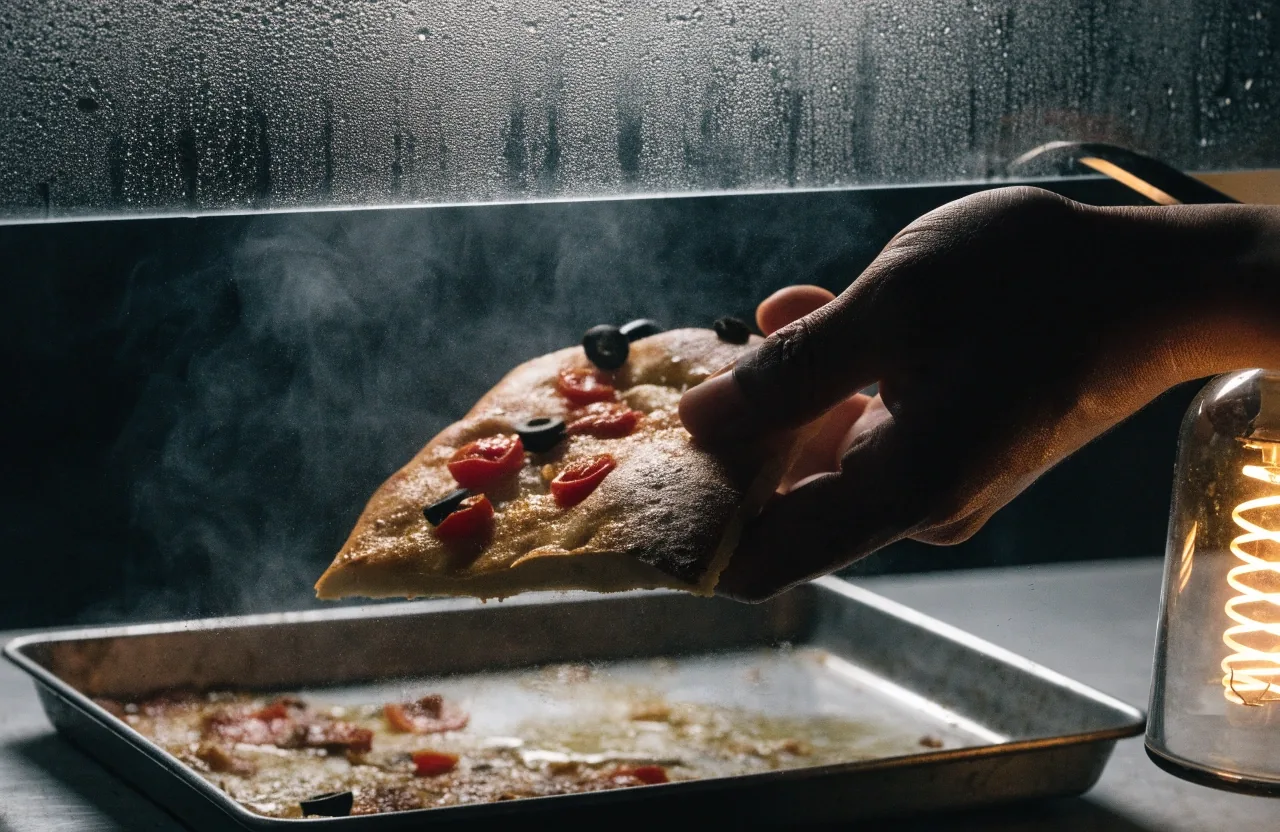
New York-style slice folding as it is lifted from the pie on a wooden peel

New York-style: the everyday slice

New York-style is the pizza most Americans grew up with, and it is the most forgiving in a home oven. The dough is lower hydration than Neapolitan, bakes on a stone or steel at 500–550°F, and gives a foldable, chewy rim.

It is the best starting point if you are new to baking pizza because small mistakes do not ruin the pie. The book's New York-style chapter covers stretch-and-fold, shaping on a peel, and the windowpane test in detail, since those are the skills every other style builds on.

HydrationFermentBake Medium1–3 days12–15 min
Proof1 h
Ferment48 h
Bake525°F

Change hydration and you change the crumb. Change ferment time and you change the flavor. Change the bake setup and you change the crust.

The three variables Dion's Pizza Cookbook builds every recipe around

Detroit-style: pan-baked and crisp-edged

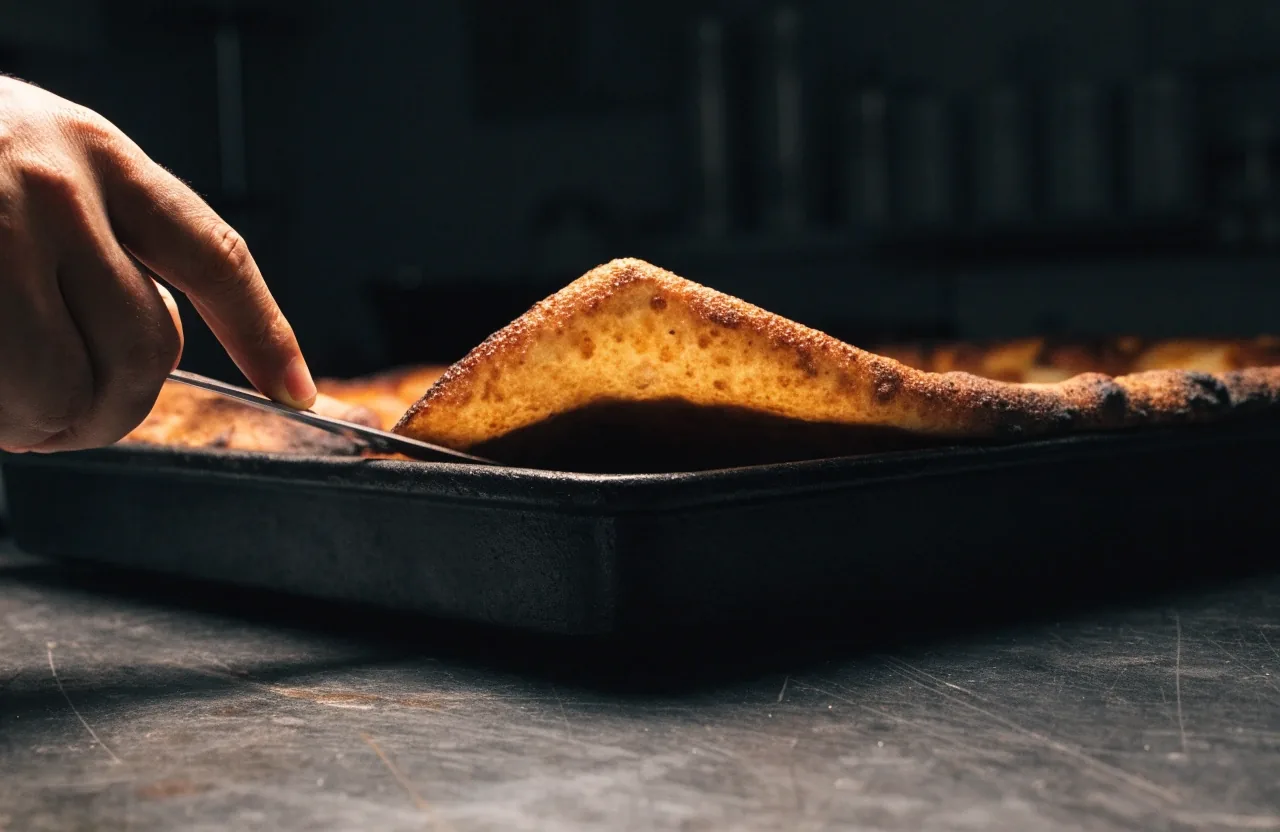
Detroit-style is baked in a rectangular pan with cheese pushed all the way to the edges. That gives it a focaccia-like crumb and a crispy, caramelized cheese border that is the whole point of the style.

It is one of the few styles that actually bakes better in a home oven than a restaurant one, because the pan does the work. The book treats it as a great second recipe for anyone who has done a New York-style pie and wants to learn pan proofing.

Home oven, pan proofed
Detroit-style pan pizza corner with a caramelized cheese border lifted from the pan

Chicago deep-dish and stuffed, told apart

People use the two names interchangeably, and they are not the same pizza. Deep-dish is a single thick shell with layers inside it. Stuffed adds a top crust over the fillings, which is why it arrives deeper and heavier. Both get eaten with a fork and knife.

Chicago deep-dish: thick, layered, fork-and-knife

Chicago deep-dish is commonly traced to 1943 and Pizzeria Uno, and it is built around a thick crust and a layered filling structure. It is usually eaten with a fork and knife because it is too heavy to fold.

The dough is more like a pastry than a bread dough, and the cheese goes down first, then the toppings, then the sauce on top. Bake time is longer and the shell is often parbaked to keep the bottom crisp. The book covers the parbake step carefully because it is where most deep-dish attempts fail.

Layer order

Crust, cheese, toppings, sauce

Chicago stuffed: the deeper cousin

Chicago stuffed pizza is a separate style from deep-dish, even though people often confuse the two. It is layered with a top crust over the fillings, making it deeper and more elaborate.

It is part of Chicago's broader pizza identity rather than a national style, and it is the most dramatic bake in the book. The construction is the story. If you like the idea of a pie that needs a knife, this is the one.

Layer order

Crust, cheese, fillings, top crust, sauce

Focaccia and pizza al taglio

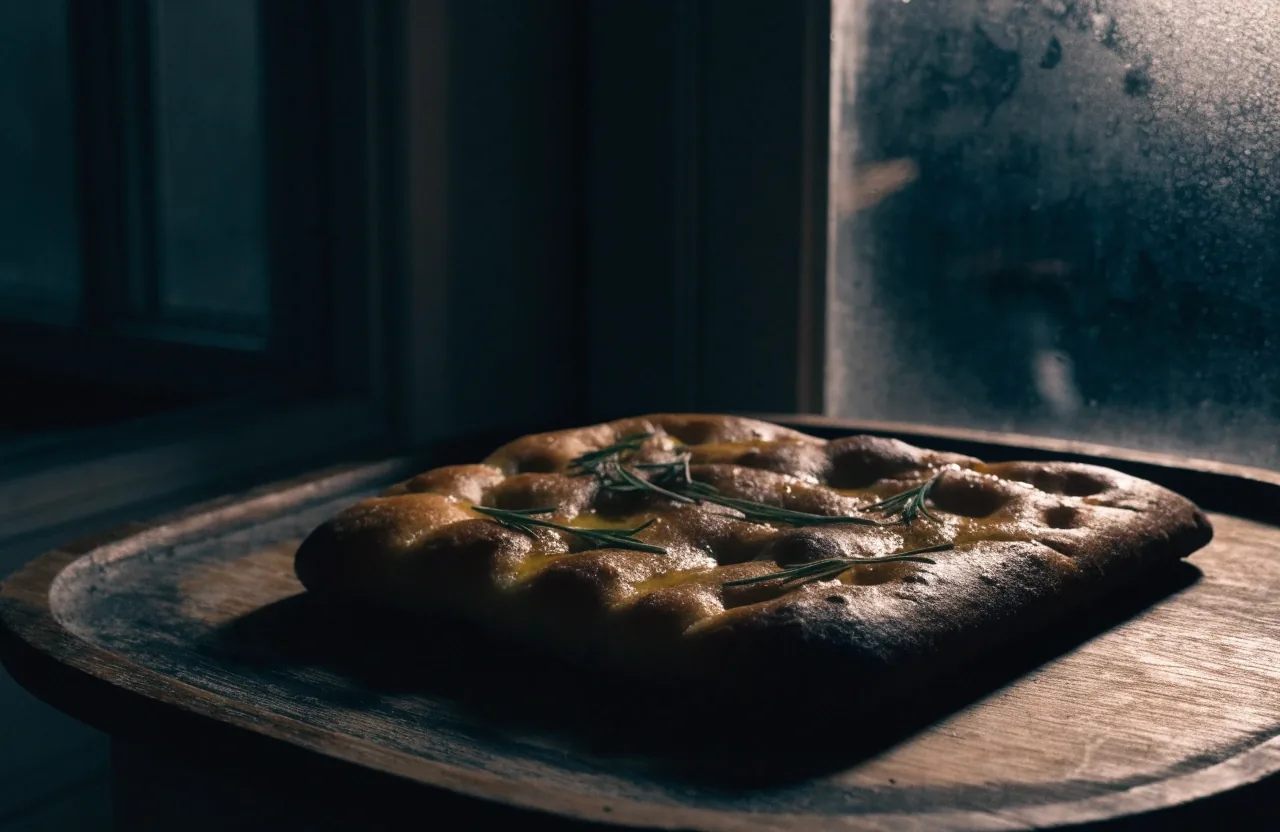
Focaccia sits between bread baking and pizza baking, and it is the easiest style in the book to get right. The dough is enriched, pan-proofed, dimpled, and baked at moderate heat with olive oil and toppings. It teaches you how a pan bake behaves, which carries directly into Detroit-style. If you already bake bread, focaccia will feel familiar. If you do not, it is a good first bake because the dough is forgiving and the results are consistent.

Pizza al taglio is a Roman rectangular pizza sold by the slice or by weight. It is often presented as square or rectangular and focaccia-like, and it is sold in bakeries and pizza counters across Italy. It is a distinct format from round Roman pizza, and it is built for portability. The dough is higher hydration and parbaked in a sheet pan, then finished with toppings and a second short bake. It is a good style for feeding a crowd because you can cut it into whatever portion sizes you want.

Focaccia slab on a wooden board with an olive oil gloss and rosemary

Two more American regional styles

New Haven-style: thin, charred, opinionated

New Haven-style is a thin, charred, often irregular pie with a strong following in Connecticut and beyond. It is baked at high heat and usually served with a specific set of toppings, and the char on the crust is the point rather than a flaw.

The book treats it as a regional American style alongside New York and Detroit, and the recipe focuses on getting the char without burning the bottom. It is a good style for anyone who likes a crisp, blistered crust.

CharHigh

Tavern-style: thin, party-cut, Midwest

Tavern-style is a thin, cracker-like Midwest style, usually cut into squares rather than wedges. It bakes fast and stays crisp, which makes it a strong option for a crowd.

The dough is lower hydration and often rolled rather than hand-stretched, which is unusual for pizza but standard for this style. The book covers the rolling step and the docking step, since both matter for getting an even bake.

CrispFast

What the bake actually asks of you

The same three stages show up in every recipe in the book, but the demands shift a lot from style to style. This is the schedule side of the comparison: how long each stage runs, and which styles push a home oven hardest.

Proof 1–2 h
Cold ferment 24–72 h
Bake 60 s–25 min
Pan rest 5–10 min

Easiest in a home oven

Focaccia, pizza al taglio, Detroit-style and tavern-style. The pan or the rolling pin carries the work, so a standard oven reaches the bake the recipe is after.

Hardest in a home oven

Neapolitan and New Haven-style. Both want heat a domestic oven does not produce, so the book relies on steel preheating and a final broil to get close.

How to choose your first style

If you have a home oven, a steel, and no experience, start with New York-style or Detroit-style. Both tolerate small mistakes and both teach skills you will use in every other recipe. There is no wrong order, but there is an easier one.

If you are new to pizza dough

New York-style, then Detroit-style

Stretch-and-fold, shaping on a peel, and the windowpane test are the skills every later style builds on. Get those steady before you chase char or height.

If you already bake bread

Focaccia or pizza al taglio

Both are pan bakes with an enriched dough and a dimple or a parbake. Your existing feel for fermentation carries straight over, and the results are consistent.

If you want the biggest challenge

Neapolitan

This is the style that most depends on oven temperature, and the book says that plainly. Steel preheating and a final broil get you closer; a wood-fired oven is still the real answer.

Whichever you pick, plan the cold ferment before you plan the toppings. That single habit is what separates a pizza that tastes like the style from one that just looks like it.

What ties the styles together

Every style in the collection comes down to the same variables: flour, water, fermentation, and heat. Once you understand them, you can move between styles without starting over each time.

About the collection
Why does the same dough behave differently in each style?

Hydration and ferment time set the crumb and the flavor, and the bake setup sets the crust. A wetter dough in a hotter oven puffs and blisters; the same dough pressed into an oiled pan caramelizes against the metal instead. The book teaches those variables in their own chapters before it hands you any style, so a change in one style carries over to the next.

Do I need a wood-fired oven to bake these recipes?

No. Most of the styles were built for pan bakes or a standard home oven, and the book is direct about which ones are not. Neapolitan and New Haven-style are the two that want heat a domestic oven does not produce; for those, the book relies on a preheated steel and a final broil to get as close as the equipment allows.

Which style is easiest for a first bake?

Focaccia is the most forgiving, because the dough is enriched and the pan does the shaping. New York-style is the best first round pie if you want to learn stretching and shaping. Detroit-style is the natural second recipe once you have handled one round pie and want to learn pan proofing.

How long does a style take from start to table?

Focaccia can go from mix to table in a single day. Most of the round and pan styles in the book want a cold ferment somewhere between one and three days, which does most of its work while the dough sits in the fridge. The bake itself is the short part: a Neapolitan pie is measured in seconds, a deep-dish in tens of minutes.

Pick a style and start with the dough

Dion's Pizza Cookbook walks through dough and fermentation first, then the nine styles on this page, each with its own chapter. If you would rather read before you buy, the baking guide covers the same variables in shorter form. Questions about an order or a specific style can go to the contact page during working hours.

482 Pizza Lane, Brooklyn, NY 11211

+1-718-555-0192

Mon–Fri 9:00 AM – 6:00 PM · Sat 10:00 AM – 4:00 PM